Language Matters: From ‘Integration’ to Social Participation
At Hildashaus, we have chosen to prioritize the term social participation, because we believe this approach recognize the realities of FLINTA* individuals aged 40+ from the global majority who have experienced displacement. We understand that language is powerful because it shapes policies, influences everyday interactions, and affects whether people feel seen, valued, and a sense of belonging in their communities.
German Context
Germany has welcomed various waves of migrants for over a century, whether to fulfill labor needs or to provide sanctuary for those in crisis. Yet, meaningful integration efforts have often remained absent from political priorities. For many who have relocated to Germany due to displacement, the only available “integration” efforts were often language courses offered on a voluntary basis, while access to work, social security, and community life remained restricted.
Although the German Integration Act of 2016 did make some progress by reducing these obstacles, it continued to frame integration as something dependent on perceived prospects for remaining in the country. Such an approach overlooks structural inequalities and fails to recognise the emotional, social, and relational dimensions of starting over in an unfamiliar cultural landscape. This perspective frames the burden of “successful integration” largely on individuals, implicitly assigning responsibility and even blame to migrants themselves for not integrating to the country, while leaving systemic barriers and institutional exclusions unchallenged.
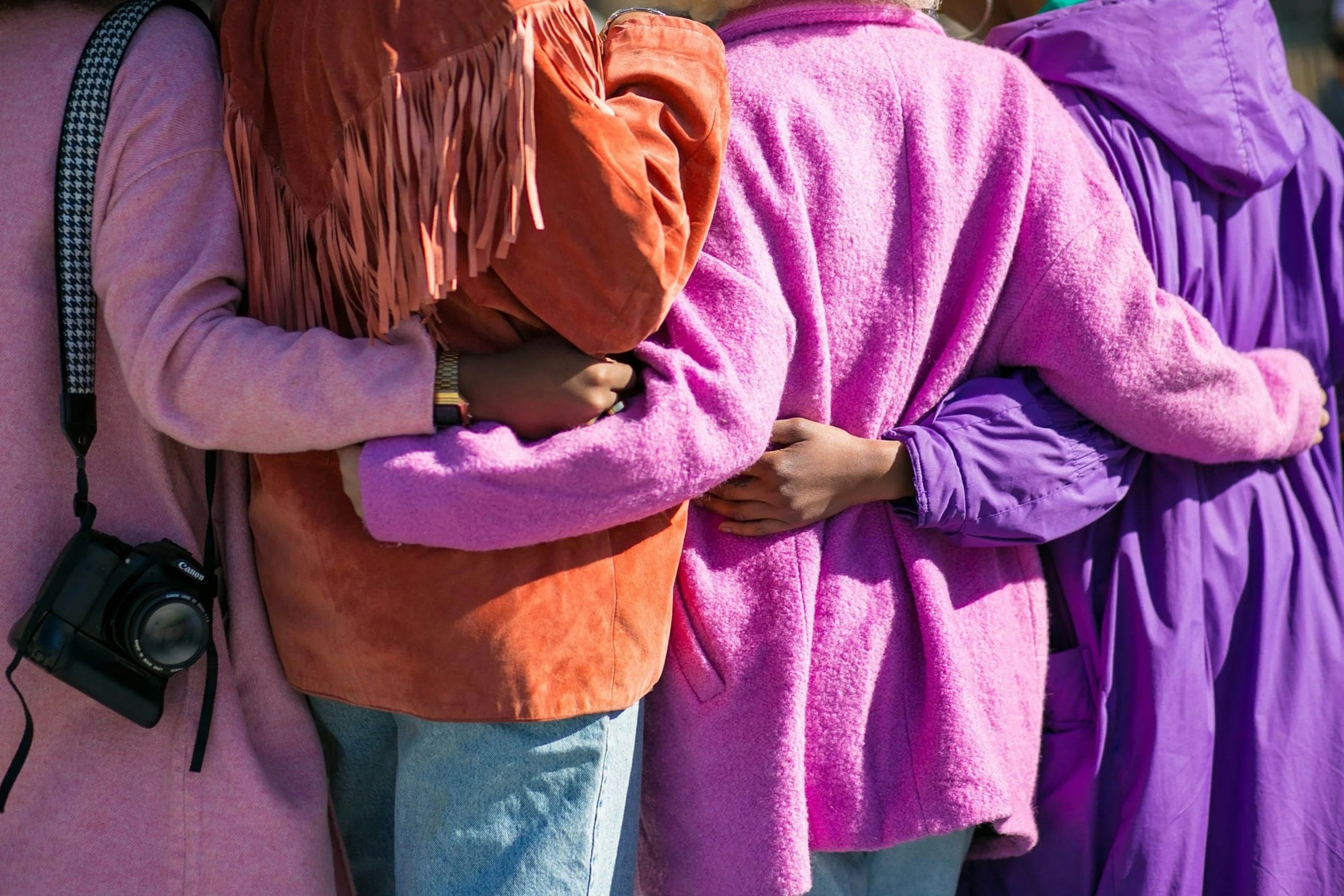
Which brings us to the next point, because when integration is discussed, it is often reduced to economic participation or institutional compliance. It assumes that belonging is something to be achieved through integration, performance, and constant self-adjustment. In this logic, failure to “integrate” is read as a personal shortcoming rather than as the outcome of structural inequality.
Social participation aims to shift this perspective, because it recognizes that exclusion is produced by systems, not by individuals, and that creating spaces of belonging is a collective responsibility. It involves building social networks, accessing community support systems, learning languages, and maintaining one's native language and cultural identity. Belonging requires more than integration; it necessitates structural systems that respect and embrace the multifaceted identities of individuals, without having to constantly prove worthiness or compliance.
At Hildashaus, we respond to these realities through a holistic and community-rooted approach. Our programs are designed with compassion and inclusivity in mind, ensuring that we provide a safe and welcoming space for FLINTA* individuals aged 40+. We strive to empower our participants with continuous access and agency, enabling them to use the tools and community we offer as their circumstances evolve.
Some of These Programmes Include:
Noor Amal
A holistic wellbeing and creative livelihood programme designed for Arabic-speaking women aged 40+ with no or beginner German (A1), the programme places wellbeing first while opening pathways toward creative livelihoods.
Participants learn, rest, create, and grow together through textile arts in a warm and supportive environment, with free childcare for children aged 2–5 as an integral part of access. Rooted in care, intersectional feminist values, collaboration, and restorative wellbeing, Noor Amal demonstrates how social participation can flourish through a participatory, trauma-informed, and culturally sensitive approach.
KHALAT (خالات)
This project is dedicated to Arabic-speaking women aged 50+ and reflects the value of age, care, and intergenerational knowledge. Using an arts-based, intersectional, and participatory approach, KHALAT creates a vibrant and inclusive space for connection, dialogue, and shared presence, without language as a barrier. Together, these practices create accessible entry points to participation that are rooted in culture, care, and collective strength.
Through embodied wellbeing, textile crafts, cooking, and expressive arts, KHALAT counters social isolation and fosters belonging beyond language barriers. All workshops are facilitated by Arabic-speaking FLINTA* instructors.
Roots & Pathways
Our newest initiative is a 12-month, trauma-informed textile art incubator for migrant single mothers aged 40+. The programme responds to structural labour-market exclusion by combining creative practice, wellbeing, system navigation, mentoring, and free childcare, supporting meaningful and sustained social participation.
Through this holistic structure, Roots&Pathways actively advances social participation by enabling sustained access, confidence-building, and collective learning, rather than demanding adaptation to exclusionary systems.
We are currently running a crowdfunding campaign for this project in order to ensure full participation for single mothers and supporting their first steps toward sustainable creative livelihoods. We invite you to support and share our crowdfunding campaign. Your contribution strengthens community-led structures and affirms dignity, belonging, and the right to imagine and build pathways together.
Language Does Matter
Social participation is an ongoing, lived practice, which is why our community-based and multilingual formats prioritise accessibility, responding genuinely to real-life needs. Our work reflects this through creative, embodied, and trauma-informed practices that honour emotional and physical experiences, recognising how displacement, age, gender, and exclusion intersect in the body.
Choosing social participation over integration is, for us, an ethical and empathetic commitment. Participation should not be a privilege to be earned, but a fundamental right and a collective responsibility that lays the foundation for shared futures. By embracing social participation, we affirm dedication to inclusivity and mutual support, and continue to create an environment where everyone can truly feel they belong and thrive. For many FLINTA* individuals aged 40+ who have experienced displacement, integration frameworks fall short. At Hildashaus, our work responds to this gap by centering access and agency rather than adaptation. Through a holistic and collective approach, we hope that our tools can be embodied by our community to take with them wherever their futures lead.
